

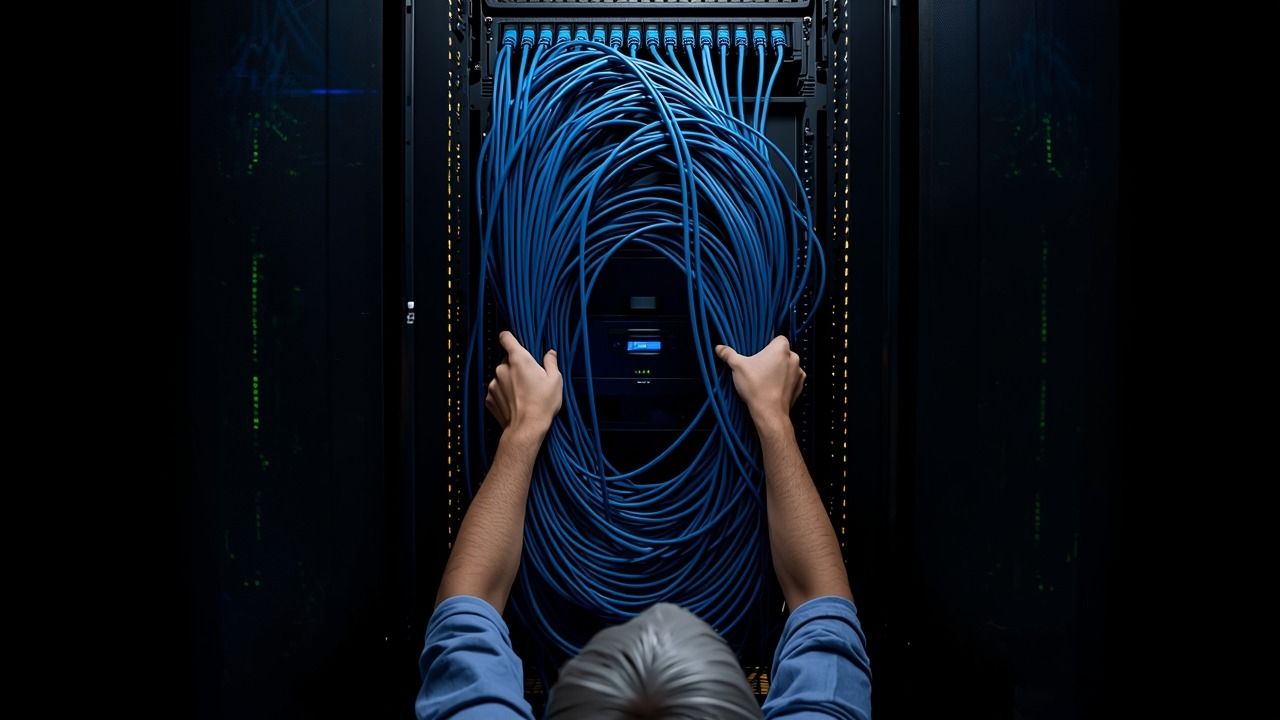
Building the Backbone: A Strategic Framework for International Infrastructure
You're standing in a boardroom in Beijing, or perhaps a municipal office in Los Angeles, and the weight of a ten-year project timeline is pressing down on everyone present. The technical drawings are spread across the table, but the real challenge isn't the engineering. It's the alignment of interests between the government, the private sector, and the community. If you've ever managed a project where the stakes involve national energy security or international trade routes, you know that the physical build is often the easiest part. The difficult part is the bridge you have to build between people before the first shovel hits the dirt.
I've spent more than three decades operating at this intersection. At 27, I was one of the youngest executives to negotiate a manufacturing partnership directly with officials from the Chinese government. That experience taught me that infrastructure isn't just about concrete and steel. It's about the strategic vision required to connect disparate industries and nations. Whether I was delivering thermal energy storage systems to the U.S. military through GES Industries or managing a $70 million real estate portfolio, the core objective remained the same: building systems that last.
In this guide, you'll learn the strategic framework I use to evaluate and execute infrastructure projects. We'll cover the economic drivers, the negotiation tactics for international partnerships, and the technical shifts in energy that are redefining what "modern infrastructure" actually looks like. You'll get a checklist for vetting international partners and a breakdown of how to align private capital with public needs.
Defining the scope of modern infrastructure development
Infrastructure development is the systematic process of planning, designing, financing, and constructing the fundamental facilities and systems that support the productivity of a society. This includes physical assets like transport networks and power grids, as well as the digital and institutional frameworks that allow trade to flow. It's the foundational layer that determines whether a city, a state, or a nation can compete on a global stage.
When we talk about how I approach infrastructure development, and why, we have to look past the immediate construction phase. Real development is an exercise in long-term asset management. In my work with the Los Angeles Department of Water and Power (LADWP), the focus wasn't just on installing thermal energy storage. It was about creating a system that would reduce peak demand on the grid for decades.
Infrastructure is generally categorized into two types:
- Hard Infrastructure: These are the physical networks. Think of the highways, bridges, energy plants, and telecommunications towers.
- Soft Infrastructure: This includes the institutions, legal frameworks, and human capital required to maintain the hard assets. Without a stable legal environment for international trade, a port is just a collection of cranes.
I've seen projects fail because the leadership focused exclusively on the "hard" side. They built the factory but didn't secure the supply chain or the political buy-in. Success requires a holistic view that treats the physical asset as one part of a larger economic engine.
Why infrastructure development is the primary driver of stability
Infrastructure development is important because it acts as a multiplier for economic activity, directly increasing the efficiency of every business that relies on it. By reducing the cost of transport, energy, and communication, well-designed infrastructure allows a nation to move goods and services faster than its competitors. It also provides a baseline for public safety and health, which are the prerequisites for any stable investment environment.
If you're an executive or a policymaker, you're not just building a bridge to move cars. You're building it to move capital. During my time leading GES Industries from 2010 to 2023, we focused heavily on advanced thermal energy storage. We weren't just selling hardware to schools and the U.S. military. We were selling the ability to maintain operations during grid instability. That's the real value of infrastructure: resilience.
When a region invests in its backbone, it signals to the international community that it's a safe place for long-term commitment. This is why I've always prioritized "bridge building" between nations. When I negotiated that first partnership in China, the goal was to create a manufacturing pipeline that benefited both sides of the Pacific. That infrastructure of trust is what allowed the physical manufacturing to thrive.
The main reasons for infrastructure development in a shifting global economy
The main reasons for infrastructure development include the need to modernize aging systems, the demand for sustainable energy transitions, and the requirement to support rapid urbanization. Governments and private entities also invest in infrastructure to stimulate job creation and to secure national interests in sectors like energy and technology. As global trade routes shift, new infrastructure is required to facilitate different patterns of logistics and resource movement.
We can break these drivers down into four specific categories:
- Economic Competitiveness: If your power costs are 20% higher than the neighboring state because of an inefficient grid, your manufacturing sector will eventually leave.
- Climate Resilience: The shift toward renewable energy requires an entirely different type of grid infrastructure. This is why our work with thermal storage was so critical; you can't run a modern economy on intermittent power without massive storage capacity.
- National Security: Infrastructure like the U.S. military installations we served requires redundant, localized energy systems to remain functional during a crisis.
- Social Equity: Providing reliable water and power to underserved municipalities isn't just a moral imperative. It's an economic one. A healthy, connected population is a productive one.
I've seen how these reasons play out in the real world. When I founded Water Bottlers, Inc. in 2002, we placed high-pH balanced water in over 4,500 Walgreens stores. The "infrastructure" there wasn't just the bottling plant. It was the massive logistics and distribution network required to keep those shelves stocked across the country.
Real-world examples of infrastructure development across sectors
Examples of infrastructure development range from large-scale utility projects like the Hoover Dam to modern digital initiatives like the expansion of 5G networks. In the energy sector, examples include the construction of utility-scale battery storage and the retrofitting of municipal buildings with high-efficiency HVAC systems. In the transportation sector, it includes everything from deep-water port expansions to the implementation of smart traffic management systems in major urban centers.
Throughout my career, I've been involved in several specific types of development that illustrate these principles:
| Infrastructure Type | Specific Example | Strategic Impact |
|---|---|---|
| Energy Storage | Thermal storage for the U.S. military | Increased operational readiness and reduced energy costs. |
| Manufacturing | China-based latex manufacturing (Olympus® brand) | Created a scalable supply chain for FDA-certified distribution. |
| Consumer Logistics | 4,500+ Walgreens distribution points | Proved the viability of niche health products in mass-market retail. |
| Real Estate | $70 million in residential/commercial assets | Provided the physical footprint for community and business growth. |
One of the most complex examples was my work with GES Industries. We weren't just building a product; we were building a solution for municipalities and schools that were struggling with rising energy costs. By using thermal storage, we could "shift" the energy load. We'd freeze water at night when power was cheap and use that ice to cool buildings during the day when power was expensive. That is infrastructure at its most strategic: using physics to solve a financial problem.
A strategic framework for international partnerships
When you're operating internationally, the complexity of infrastructure development doubles. You aren't just dealing with engineering standards; you're dealing with cultural standards and different legal systems. My background in Cantonese and my early experience in China gave me a unique perspective on this. You have to be able to speak the language of the people you're working with, both literally and figuratively.
If you're looking to build a manufacturing or infrastructure partnership abroad, follow this five-point vetting process:
- Verify the Political Alignment: Does the project align with the five-year or ten-year plan of the local government? If you're fighting the current of national policy, you'll eventually lose.
- Assess the Local Supply Chain: Can you source at least 30% of your materials locally? This reduces your exposure to trade volatility and builds local goodwill.
- Audit the Institutional Stability: Look at the track record of the local courts and regulatory bodies. Infrastructure is a long-term play; you need to know the rules won't change in year three.
- Evaluate the Human Capital: Do you have a local leadership team that understands the nuances of the region? You cannot manage an international infrastructure project entirely from a headquarters in another country.
- Technical Feasibility vs. Cultural Fit: Just because a technology works in Nevada doesn't mean it's the right fit for a coastal city in Asia. The environment and the usage patterns will differ.
The role of energy in future infrastructure
The future of infrastructure is inseparable from the future of energy. We're moving away from a model of giant, centralized power plants toward a decentralized, "smart" grid. This shift is what I've focused on for much of my career. When we worked with the U.S. Department of Energy standards at GES Industries, it was clear that the goal was to create "islands" of energy stability.
If you're planning a development today, whether it's a commercial real estate project or a manufacturing hub, you have to think about energy independence. Can the site generate its own power? Can it store it? If the main grid goes down, does your infrastructure stay live?
This is why "building bridges" is my signature point of view. You have to build a bridge between the old way of doing things (centralized, fossil-fuel-based) and the new way (decentralized, renewable, and storage-heavy). Those who can bridge that gap are the ones who will own the next thirty years of development.
Negotiation tactics for high-stakes infrastructure
In my experience, the most successful negotiators in this space aren't the loudest ones. They're the ones who have done the most homework. When I was 27, I didn't get that Chinese partnership because I was the most experienced person in the room. I got it because I understood the strategic needs of the Chinese officials as well as I understood my own.
Here's a phrase bank you can use when you're at the table for a major infrastructure or trade deal:
- To find common ground: "We're looking to build a framework that supports your long-term regional development goals while meeting our efficiency metrics."
- To address risk: "Let's look at the contingency plans for the supply chain. How do we ensure this project remains resilient during market shifts?"
- To push for transparency: "In the interest of a long-term partnership, we need to have clear visibility into the regulatory approval timeline."
- To close the deal: "This partnership isn't just about this one facility. It's about building the infrastructure for a decade of shared growth."
Notice that these phrases focus on the "we" and the "long-term." Infrastructure is a marriage, not a transaction. You're going to be working with these partners for a long time. Treat the negotiation as the first step in a multi-decade relationship.
Managing the financial lifecycle of a project
You can't talk about infrastructure without talking about the money. Whether it's the $70 million in real estate assets I've managed or the municipal contracts for thermal storage, the financial structure is the foundation. Most people focus on the "CapEx" (Capital Expenditure), the money it takes to build the thing. But the real pros focus on the "OpEx" (Operating Expenditure).
An infrastructure project that is cheap to build but expensive to maintain is a failure. This is why I'm such a proponent of advanced technologies like thermal energy storage. The upfront cost might be higher, but the long-term savings on energy bills and grid maintenance make the "Total Cost of Ownership" much lower.
When you're evaluating a project, ask these three questions:
- What is the IRR (Internal Rate of Return) over a 20-year period, not just a 5-year period?
- What are the "hidden" maintenance costs that will kick in after the warranty expires?
- How does this asset's value change if the cost of energy doubles? (Because it might).
Why I believe in the "Bridge" philosophy
My career has taken me from the University of Portland, where I earned my MBA in Entrepreneurship and Innovation Management, to the highest levels of international trade and energy tech. I've seen the world from the perspective of a manufacturer, a real estate investor, and an executive producer for TV One. What I've learned is that every industry is just another type of infrastructure.
Media infrastructure moves ideas. Energy infrastructure moves power. Real estate infrastructure moves families and businesses. If you want to be successful in any of these areas, you have to be willing to build bridges between them. You have to be able to talk to the engineer, the politician, and the investor in the same afternoon.
The future belongs to those who don't see these sectors as silos. It belongs to the strategists who can look at a piece of land and see not just a building, but a node in a global network of trade and energy. That is how I approach infrastructure development. It's not about the individual project; it's about the connection.
A checklist for your next infrastructure initiative
Before you commit to a major development project, run it through this checklist. If you can't answer "yes" to at least four of these, you need to go back to the drawing board.
- Strategic Alignment: Does this project solve a problem that will still exist in 15 years?
- Scalability: Can this infrastructure be expanded without tearing down what we're building now?
- Resilience: If the primary energy or data source is cut off, does the system have a backup?
- Partnership Stability: Do all stakeholders have "skin in the game" that keeps them at the table during hard times?
- Regulatory Path: Is there a clear, documented path for all necessary permits and environmental approvals?
I've used variations of this checklist for everything from the Olympus® brand latex manufacturing to my work with the U.S. military. It's a simple tool, but it forces you to confront the reality of the project before the capital is deployed.
Take the next step
Infrastructure development is a complex, high-stakes game that requires more than just technical skill. It requires the authority of an experienced strategist who knows how to navigate international waters and shifting energy landscapes. If you're looking to build bridges between industries or nations, I invite you to reach out and discuss how we can apply these strategic frameworks to your next project. Let's build something that lasts. Connect with me at Volarix Global to start the conversation.
Frequently asked questions
What is infrastructure development?
Infrastructure development is the creation and maintenance of essential systems like transport, energy, and digital networks that allow a society to function. It involves a multi-stage process of planning, financing, and construction to build the foundational assets of an economy.
Why is infrastructure development important?
It's important because it drives economic growth by increasing efficiency and reducing the costs of trade and production. Quality infrastructure also provides the resilience and stability necessary for national security and public health.
What are some examples of infrastructure development?
Common examples include the construction of highways, deep-water ports, and utility-scale energy storage systems like the thermal storage projects we delivered at GES Industries. It also includes "soft" infrastructure like the legal systems and trade agreements that allow these physical assets to be used effectively.
What are the main reasons for infrastructure development?
The primary reasons are to modernize aging facilities, support growing urban populations, and facilitate the transition to new energy sources. Governments also use infrastructure as a tool for job creation and to improve their nation's competitive position in the global market.